Het Mexico City-nummer
Inside Mexico City's Guadalupe Basilica in November
How to walk the Tepeyac shrine in November 2026: under the tilma on the moving walkways, past the leaning old basilica, up to the chapel on the hill.

Door Inês CarvalhoThe colonias the guidebooks skip
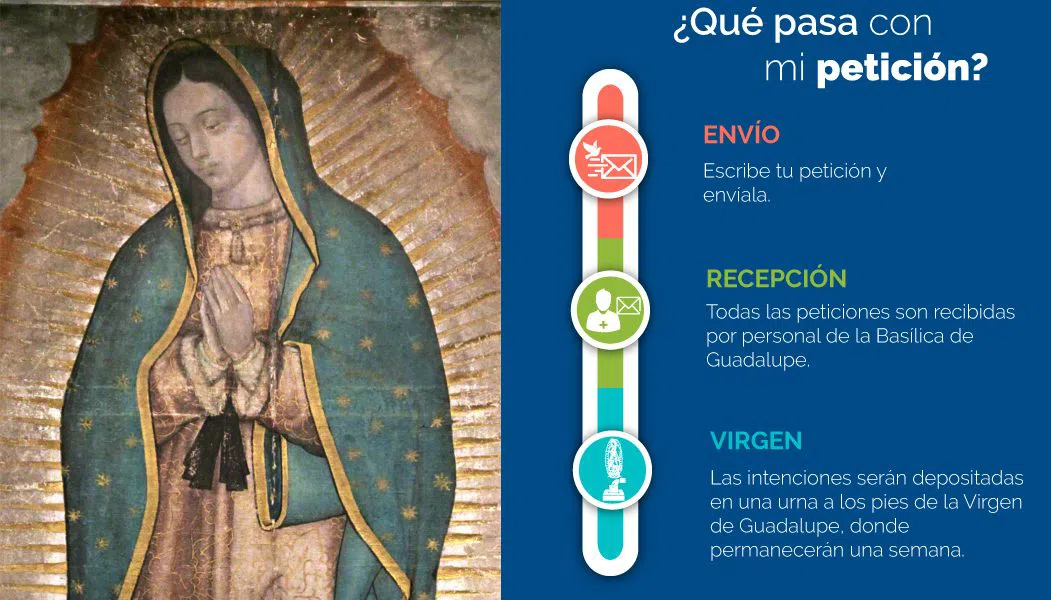
The tilma hangs in bulletproof glass above the altar of the 1976 basilica, and you see it from a moving walkway. Four of them run under the frame, and the look itself takes under a minute, so ride round twice.
The basilica and the moving walkways
Insigne y Nacional Basílica de Santa María de Guadalupe (La Villa) is free, with no ticket and no booking. The building is circular and tent-like, its green copper roof sloping to a single point. Inside there are no columns, only a wooden ceiling over a floor that all faces the same wall of glass.
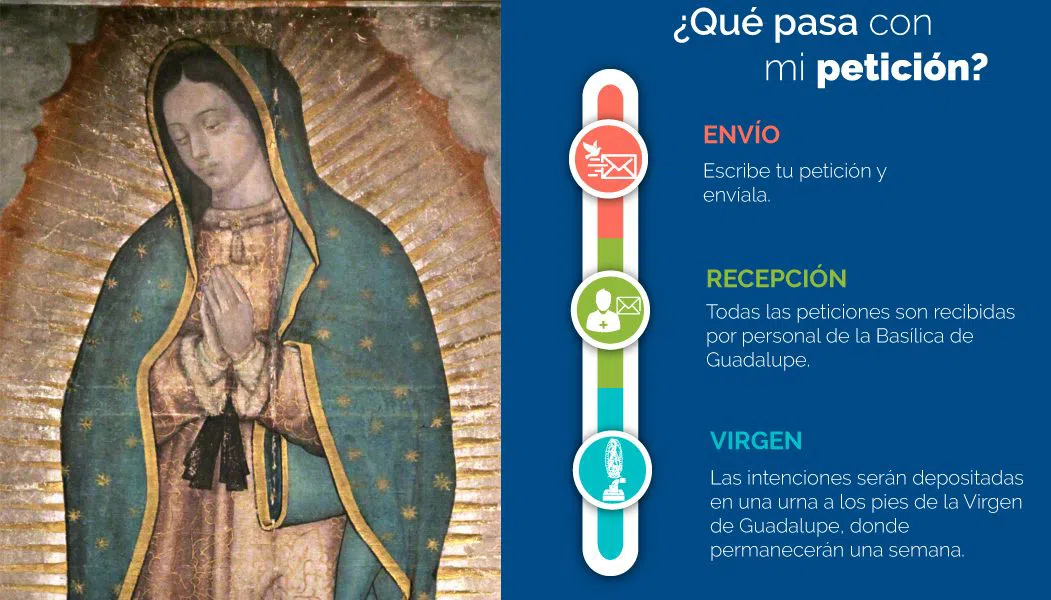
The travelators are the centre of the visit. You join below the altar, cross under the framed image and step off on the far side. Nobody may stop in front of the tilma, but you can walk back round and ride it again.
Coach and pilgrimage groups arrive all day, and you can ask the sacristy about a group Mass.
Plan je reis naar Mexico City
Actuele prijzen van onze boekingspartners.
Gratis annuleren bij veel kamers. We kunnen een commissie ontvangen als je boekt.
The old basilica next door
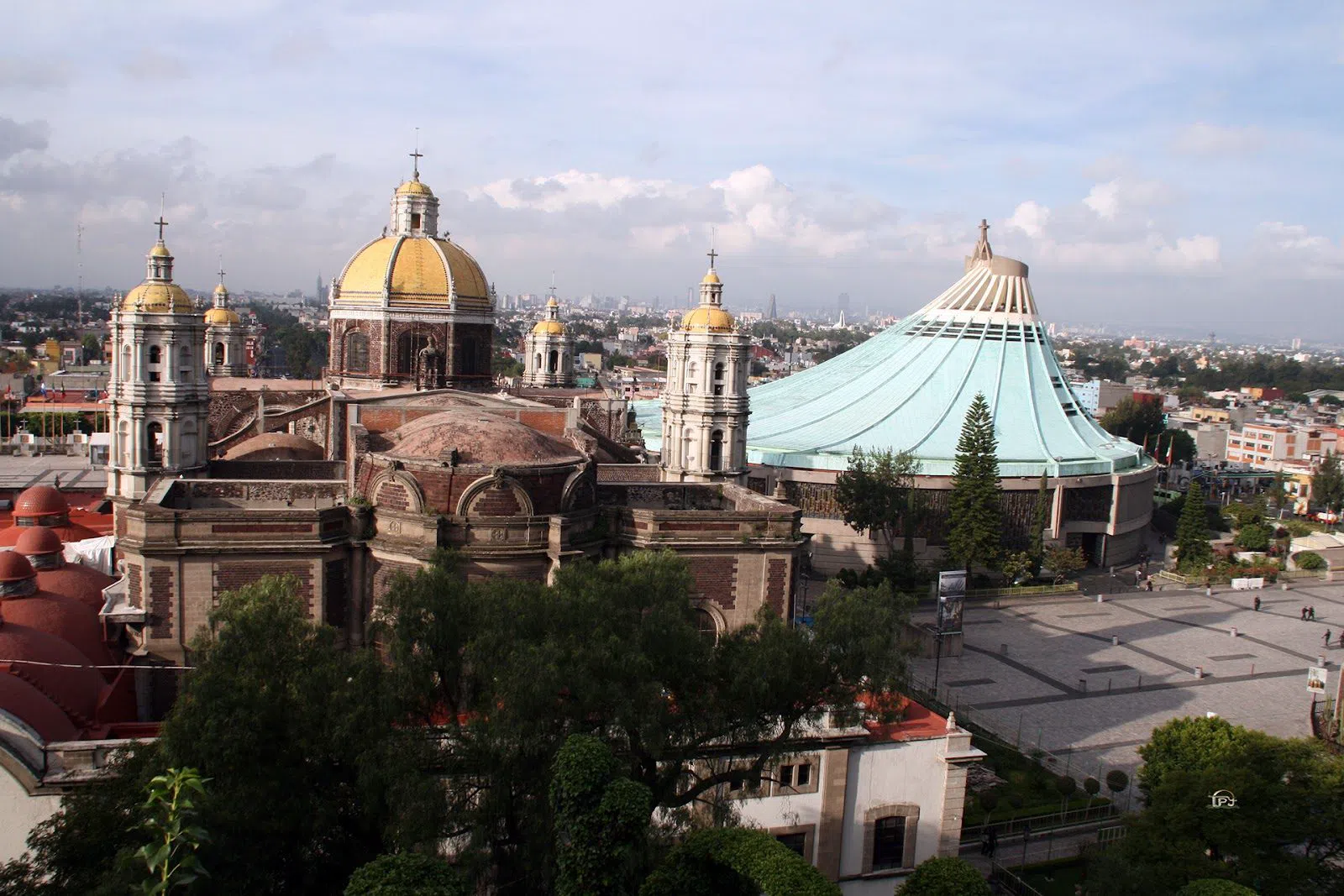
Templo Expiatorio a Cristo Rey, the Antigua Basílica (La Villa), held the tilma until 1976. It is an early-1700s baroque church in dark tezontle stone, with four octagonal corner towers in yellow tile, tilted and sinking into the soft lakebed. The lean reads from the atrium, before you go in.
Inside are gilded altarpieces and a painted dome, the prettiest interior on the site.
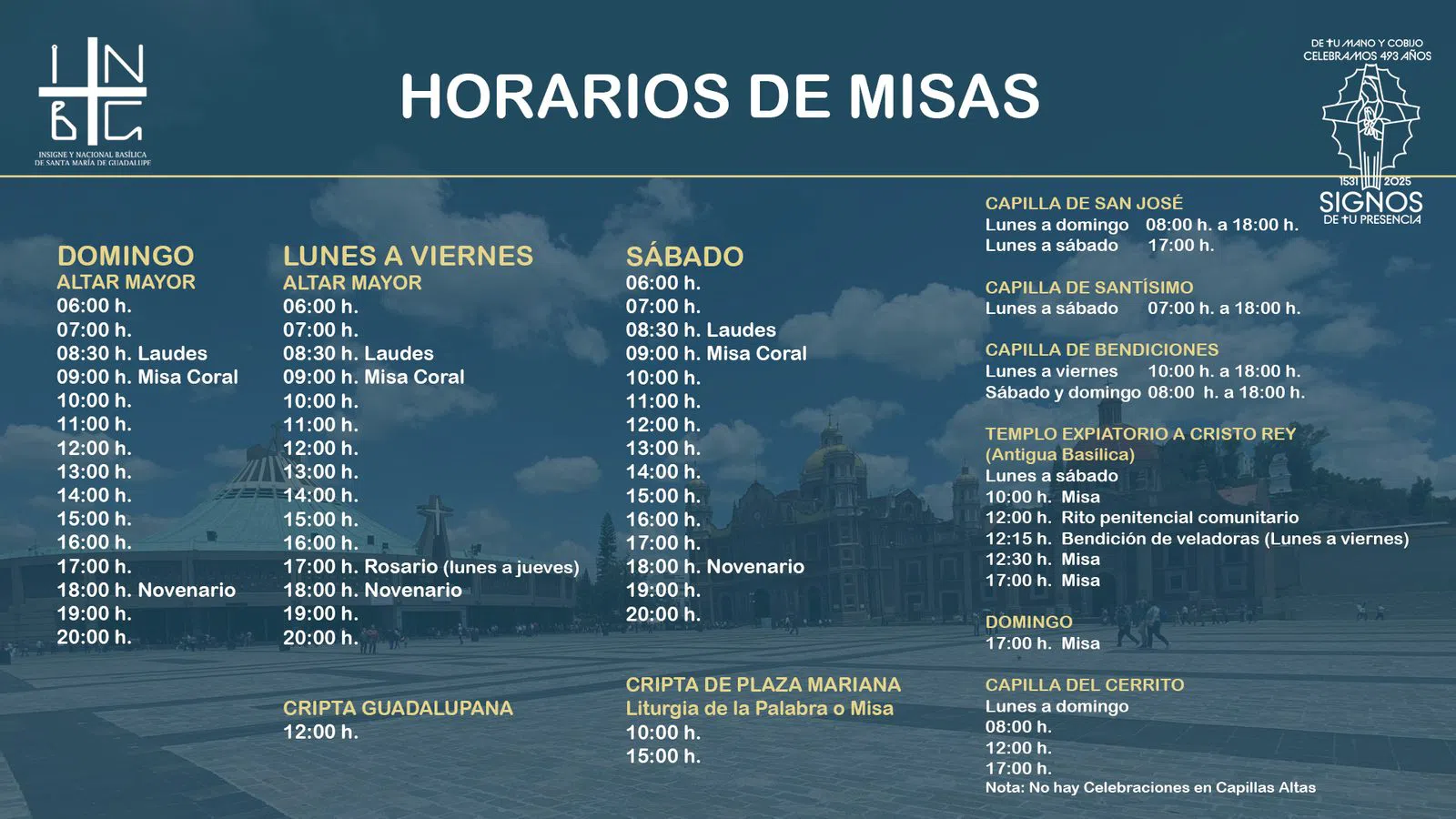
Walk in free. Mass runs Monday to Saturday at 10 a.m., 12:30 p.m. and 5 p.m., and on Sunday at 5 p.m., so time the visit around those.
Capilla del Pocito and the parish that holds its keys
Capilla del Pocito (La Villa) is the finest building in La Villa and the one most visitors walk straight past. Guerrero y Torres designed it in 1791 over the little well of the legend: a tiny circular late-baroque chapel in red tezontle and pale cantera, its domes tiled blue and white in talavera, its windows cut as stars.
The interior holds only a handful of people at a time, so a group waits outside in turns. Its hours follow the Capuchinas parish schedule, so check there first.
Parroquia de Santa María de Guadalupe Capuchinas (beside the old basilica) is that parish, a neoclassical former Capuchin convent church in grey stone with a single tower and a pedimented façade. The nave is bare-walled and cool. Entry is free, Monday to Saturday 10 a.m. to 5 p.m. and Sunday 9 a.m. to 7 p.m., with Masses at 8 a.m., 10:30 a.m., 12:30 p.m. and 6 p.m. Five minutes inside is enough for the convent history.
Capilla de Indios
Capilla de Indios (foot of the hill) is a low whitewashed 17th-century chapel, one nave under a plain bell gable, set among trees. Candles and handwritten petitions fill it. Tradition puts Juan Diego's last years on this spot, and it is the quietest and most devotional corner of the site.
It opens daily 10 a.m. to 5 p.m., free, with Sunday Masses at 8 a.m. and 5 p.m. There is not much room inside.
The climb to the Cerrito
Capilla del Cerrito (Tepeyac hill) stands at the top of a long curving stone staircase, under a small dome, 15 minutes of climbing. From the terrace balustrade you look straight down on the green dome-tent of the new basilica, with the city spreading out behind it.
It is free and open 7 a.m. to 6 p.m. daily, with a community Mass at noon. The staircase is the bottleneck on the site, and a large group does better going up in halves.
Jardín del Tepeyac (east slope) sits behind the Cerrito stairs. Most tour groups never come down this side, which keeps it calm. The terraces hold a small waterfall feeding a pool and a bronze fountain group of 16 life-size figures in adoration. It is open-air and free, and a party that has split up can meet again there.
The esplanade, the bells and the museum
Plaza Mariana (across the footbridge over Calzada de Guadalupe) is the 2011 extension, which doubled the room on the site. The esplanade is wide pale stone, open all the way back to the green basilica, with an auditorium block and a columbarium wall of niches. It is public ground, open 24 hours, 365 days a year. The Museo Guadalupano space inside it has still not opened to visitors, so leave it out of the plan.
Carrillón Guadalupano (on the atrium) plays at 10 a.m., noon, 2 p.m. and 4 p.m., outdoors and free. The tower carries 48 bells cast in Europe and four clock faces: astronomical, civil, solar and Aztec. A stage of doors opens on a Dutch-engineered automaton retelling of the apparitions, with robotic figures of Juan Diego and Bishop Zumárraga. Arrive on one of those four times.
Museo de la Basílica de Guadalupe (behind the old basilica) holds more than 4,000 pieces, among them thousands of ex-votos. The 19th-century galleries hang colonial oil paintings in heavy gilt frames and show ivory and marble sculpture, then wall after wall of small painted tin ex-voto panels. It opens Tuesday to Sunday, 10 a.m. to 5 p.m. General admission is 10 pesos and concessions are 5 pesos; under-12s go free with an adult. The rooms themselves are small.
Walking in along the Calzada de los Misterios
Walk the last stretch rather than being set down at the gate. Calzada de los Misterios is a long tree-lined pedestrian promenade following a pre-Hispanic causeway, the road that ran from Tenochtitlan to Tepeyac. Fifteen baroque stone pillar-shrines for the mysteries of the Rosary stand along it, eight of them original to 1675. It ends at the Monumento a los Peregrinos and a plain cross 22 metres high.
The street is public and walkable at any hour. Walking pilgrimages and group processions use it as the standard approach.
Buying something at the shrine
Colecturía de la Basílica (inside the basilica and beside the carillon) is the sanctuary's own shop, open daily 7 a.m. to 7 p.m. at both branches. The racks hold rosaries, medals and tall candles, with framed tilma replicas stacked behind glass. Most of the stock is made by Mexican artisans and convents, and the takings go to the sanctuary. You can also order online.

Mercado de Artesanías La Villita (a block north of the La Villa-Basílica metro, opposite the south gate) is the largest of the markets ringing the shrine, and a sight in itself. Hundreds of Guadalupe statues, glass-cased shrines, candles and embroidered textiles fill a warren of tarpaulin-roofed stalls, floor to ceiling. Quality runs from religious kitsch to good craft, and prices are lower than in the shop. The aisles are narrow.
Lunch within walking distance
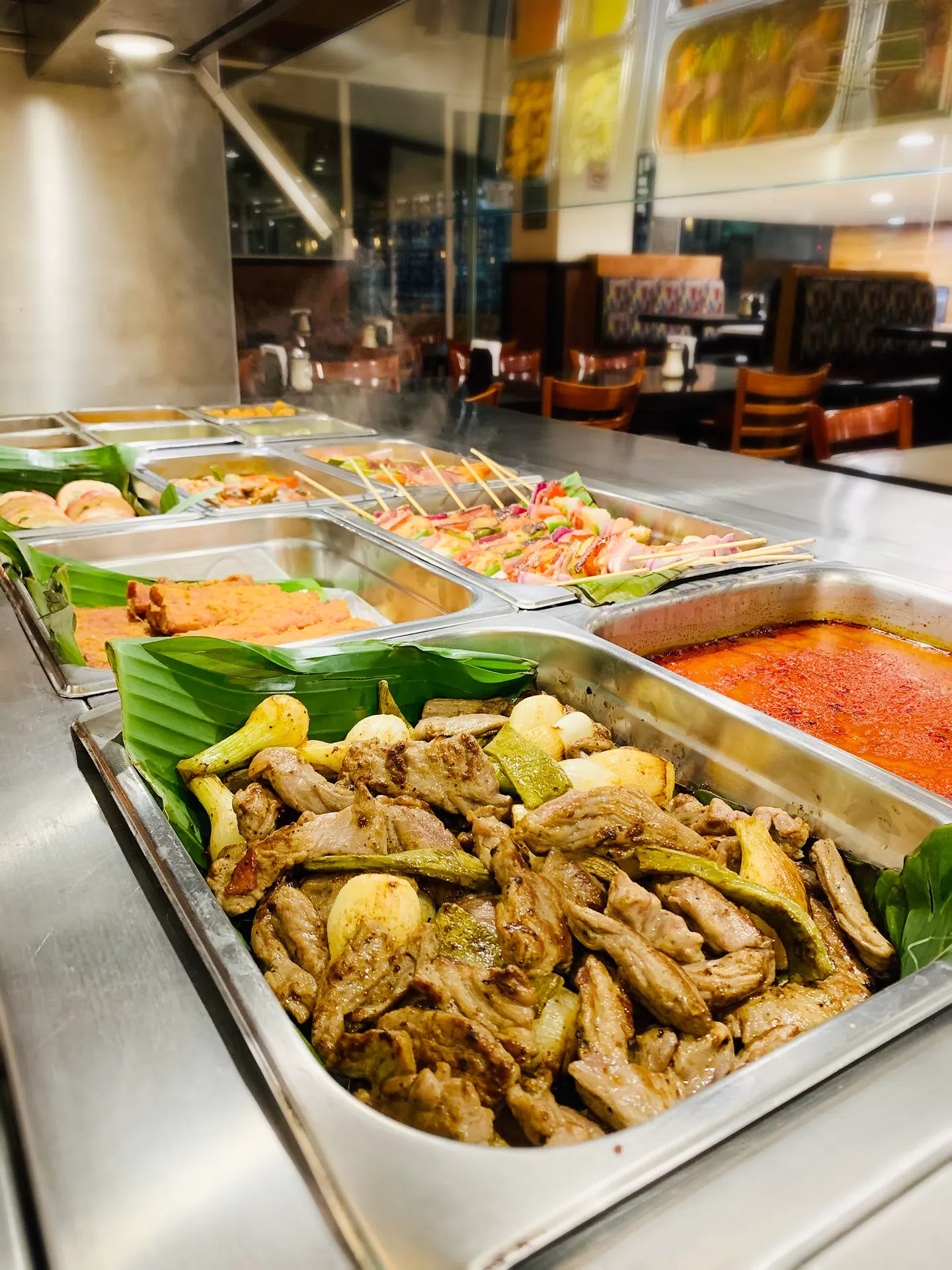
Restaurante Lepanto (Moctezuma, Aragón La Villa) has been in the area for more than 30 years and is the most reliable sit-down lunch near the shrine. The dining room keeps white-clothed tables and waiters in waistcoats, and the kitchen sends out grilled plates and pasta. It opens 7 a.m. to 10:45 p.m. Monday to Thursday, until 11:15 p.m. Friday and Saturday, and from 8 a.m. on Sunday. Book ahead on pilgrimage weekends, by phone or email.
Two walks on the way back
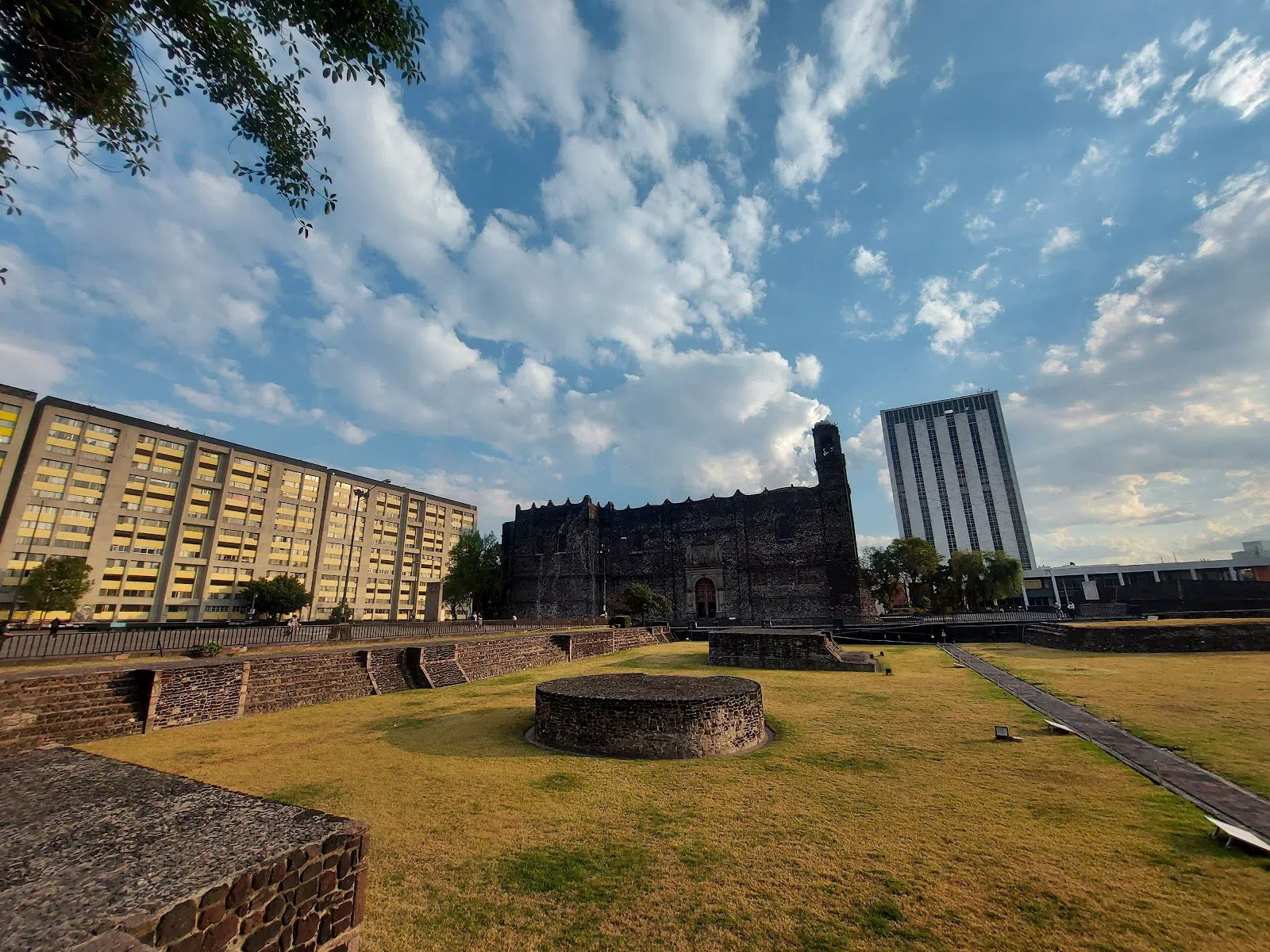
Zona Arqueológica de Tlatelolco, the Plaza de las Tres Culturas, is the standard pairing with the shrine on the way back into town: the market city the Mexica lost in 1521. Stepped platforms and twin-stair temple bases sit excavated below street level, with the 16th-century stone church of Santiago on one edge and 1960s concrete housing towers on another. It opens daily 8 a.m. to 6 p.m., and entry to the interpretation centre is free. Free Spanish-language guided tours run Monday to Friday, 8 a.m. to 2 p.m. Coaches park on the Eje Central side.
Parque Nacional El Tepeyac is the hill behind the shrine, 1,500 hectares of dry pine and eucalyptus with dirt switchback trails and bare rocky ridgelines. The summit outlook takes in the whole grey grid of the Valley of Mexico, a bigger view than the Cerrito gives. The trails are broad enough for a group. Go in daylight and with company, since this is a working city park.
Best time to go in November
Start high and walk down. Take the Cerrito staircase first, come down through the chapels at the foot of the hill, then cross the footbridge to the esplanade when your legs have had enough.
Come on a weekday, but not a Monday, when the museum closes. Sunday changes the Mass schedule at the old basilica and at Capilla de Indios, so read the hours above before you fix the order of the walk.
Guided day trips bundling the shrine with Tlatelolco run every day of the week, and the current season runs from 2 November 2026 to 31 October 2027. Entry costs nothing at the gate, so in November a booking buys the transport, the pairing and a guide.
Is it worth it
It suits a visitor who will climb a staircase and give the complex a half day rather than a stop. Six churches and chapels, a museum, a garden and a hilltop sit inside one site, and only the museum charges.
Before you go
The museum closes on Mondays, Lepanto wants a reservation on pilgrimage weekends, and the Pocito opens on the Capuchinas parish schedule; the rest of the site is free and open daily. See the Mexico City guide and the Mexico City hotel search.
Voor vertrek
Do you need a ticket for the Basilica of Our Lady of Guadalupe?
No. The new basilica is free, and you do not need a ticket or a booking. The old basilica, the Pocito, the Capilla de Indios, the Cerrito chapel, the carillon and Plaza Mariana are free too. The museum is the only thing you pay for: 10 pesos general, 5 pesos for concessions, and under-12s free with an adult.
Can you stand in front of the tilma?
No. Four moving walkways run beneath the framed image, and you look up at it as you pass, which takes under a minute. If you want longer, step off at the far side and ride through a second time.
How long does the whole site take?
Give it a half day. The Cerrito staircase alone is a 15-minute climb, the museum sits in small rooms behind the old basilica, and the Jardín del Tepeyac, Plaza Mariana and the chapels at the foot of the hill each add time.
What is closed on a Monday?
The Museo de la Basílica de Guadalupe, which opens Tuesday to Sunday. Everything else on the site keeps its normal schedule, and the Capilla del Pocito follows the Capuchinas parish hours rather than its own.
Where should a large group meet up?
Plaza Mariana was built to absorb pilgrim crowds, so use it as the meeting point, and the Jardín del Tepeyac behind the Cerrito stairs is quieter once people have split up. The Cerrito staircase is where everyone backs up, so send a big group up in halves.